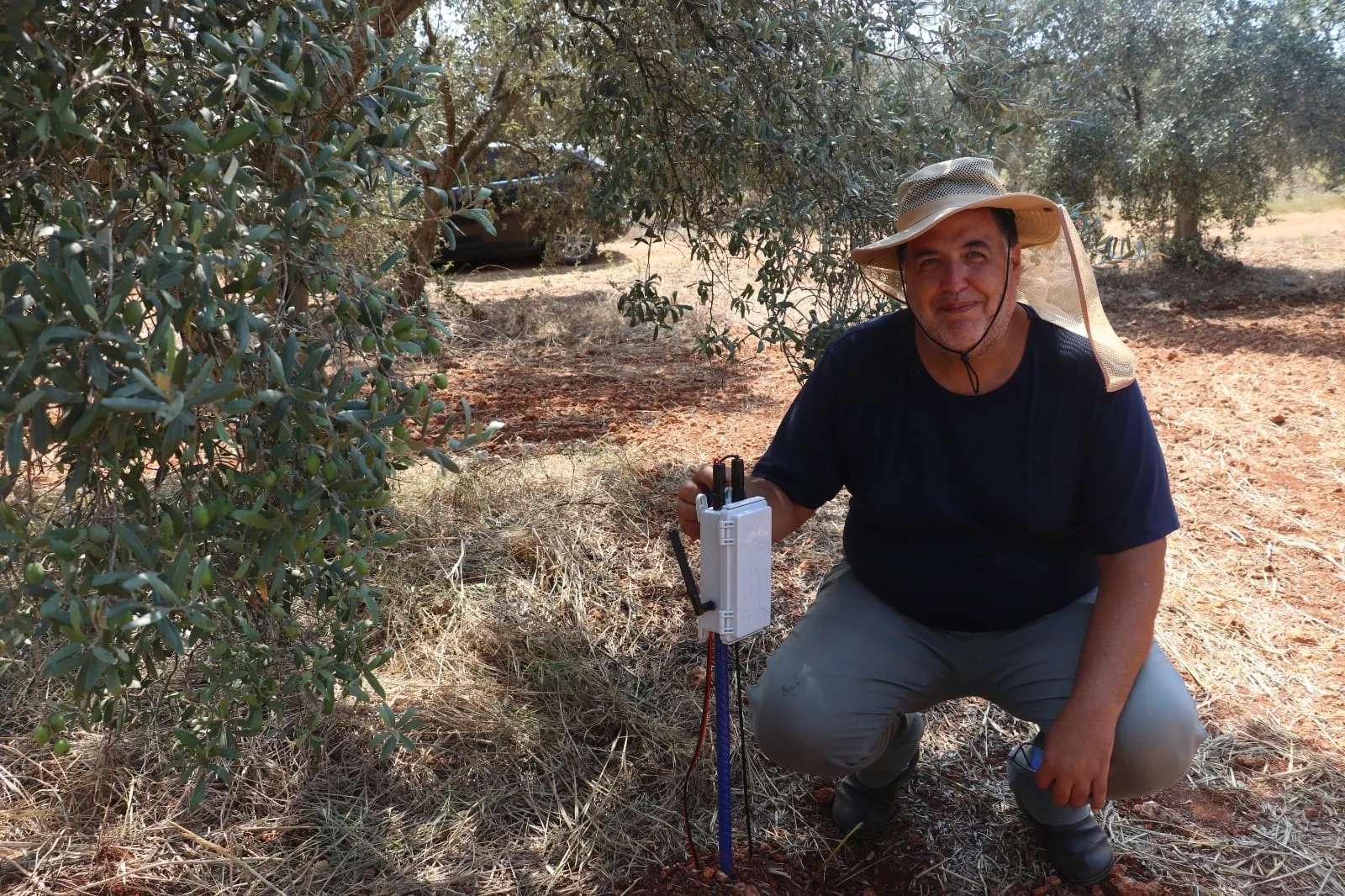

Fifteen minutes in an olive grove
Placing a soil sensor in the ground takes fifteen minutes. The interesting part is that once the first data arrives, an irrigation decision made “the way it has always been done” can change just as fast.
We were in Adana in August 2026, installing an AgroNode GSM modem and soil sensor in the olive grove of the Tabipler Agricultural Cooperative. The field had visitors that day: journalists were coming to cover the cooperative’s technology investments. Everyone on the team was asking the same question — would we finish the install before the press arrived?
We did. More than that: the installation took one person fifteen minutes. The team’s real surprise wasn’t finishing before the journalists — it was how easy the install turned out to be.
What was installed, and what does it measure?
The node we placed in the grove measures three things: soil moisture, soil EC (salinity), and soil temperature. The device runs on battery and only needs charging every six months; it sends its readings over GSM. The cooperative follows the data from the panel on our website — the state of the soil is visible without going out to the field.
First data, first decision change
Before the installation, irrigation decisions were made with traditional, estimate-based methods. When the first readings came in, the picture was clear: the habitual methods were leaving the soil too dry. The cooperative updated its decision in the same period — the soil is now kept moister.
For olives, the two most critical readings are exactly these: soil moisture and salinity. Moisture shows the tree’s water stress; EC shows salt buildup in the root zone. Neither is visible to the eye, and both are only known once measured.
What we take away from this
The cooperative’s experience can be summed up in one sentence: the way to prevent the invisible mistakes of traditional methods is to measure the soil. Considering the installation took fifteen minutes, their assessment — “this is needed wherever farming happens” — doesn’t sound exaggerated at all.
From our side, this install also answered a question we were curious about: does a sensor genuinely make life easier for a farmer working alone in the field? In Adana, the answer is yes — and a photo of that answer is below.